Keeping Children Engaged Through a Long Session
How to run a beach digging session that nobody wants to leave
The technical challenge of beach digging is relatively simple — the human challenge of keeping four children with different ages, attention spans, and ideas all engaged in the same project for two hours is considerably harder. Experienced beach-digging parents develop a set of techniques for managing this: role assignment, narrative framing, energy resets, and knowing when to change direction rather than push through. This guide covers what actually works.
Assign Roles Before You Start
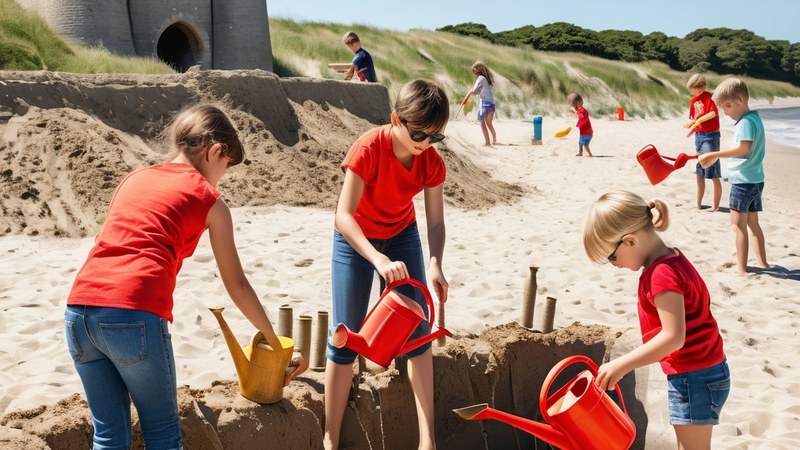
The single most effective technique for a mixed-age group is role assignment before the digging starts. Not 'you can all help dig' — specific roles with titles. Chief Architect (designs the project). Chief Diggers (do the primary excavation). Water Carriers (keep the moat filled). Decorators (shells, pebbles, finishing details). Chief Inspector (presses the tunnel roof and signs off each section as safe). Children take roles seriously when they have been formally assigned. Write them in the sand if it helps. Change roles mid-session when energy flags — a new role resets attention as effectively as a snack.
Frame It as a Story
The best beach digging sessions have a narrative. Not just 'we are digging a hole' but 'we are building a fortress for the king before the enemy (the sea) arrives at sundown'. Or 'we are treasure hunters who have found an ancient map and must excavate the site before the tide covers it'. The story gives the digging purpose beyond itself, and children — especially ages 3–8 — engage with a narrative far longer than they engage with a project. A treasure hunt with a hand-drawn map from home is fifteen minutes of digging elevated to an adventure.
Build In a Payoff Moment
Every good session needs a climactic moment. For a castle moat, it is the first wave that fills the moat. For a tunnel, it is the moment the hands meet underground. For a volcano, it is the eruption. For a channel, it is the moment the dam is breached and the water rushes through. Design the project around this moment — build toward it, talk about it as you dig ('imagine when the water gets in here'), and make sure the children are watching when it happens. The payoff is what they will remember and what they will want to repeat.
The Energy Reset
Every session has a mid-point slump, usually around 40–60 minutes in. Recognise it rather than fighting it — a five-minute snack break, a paddle, or a race to the sea and back resets energy levels entirely. Then come back to the project with a new phase or a new role. A session that runs three hours with two intentional breaks is better than a two-hour session that grinds to a defeated halt. Do not try to push through the slump — redirect it.
The Competition Technique
For older children (6+), a competitive element transforms engagement: parallel channels racing to the sea, whose dam holds longest, who can build the tallest turret that survives the first wave. Siblings dig twice as hard when there is something at stake. Keep the stakes low and the judging light-hearted — the point is the digging, not the winning. For very competitive siblings, make the teams mixed-age so it is not older-versus-younger.
Knowing When to Stop
The best time to end a session is slightly before everyone is ready to leave. Ending on a high — the tunnel is complete, the moat just filled, the volcano just erupted — means everyone leaves wanting to come back. Ending after the slump, when the project has collapsed and children are overtired, means the memory is of frustration rather than triumph. Read the energy and call it before the end rather than after.