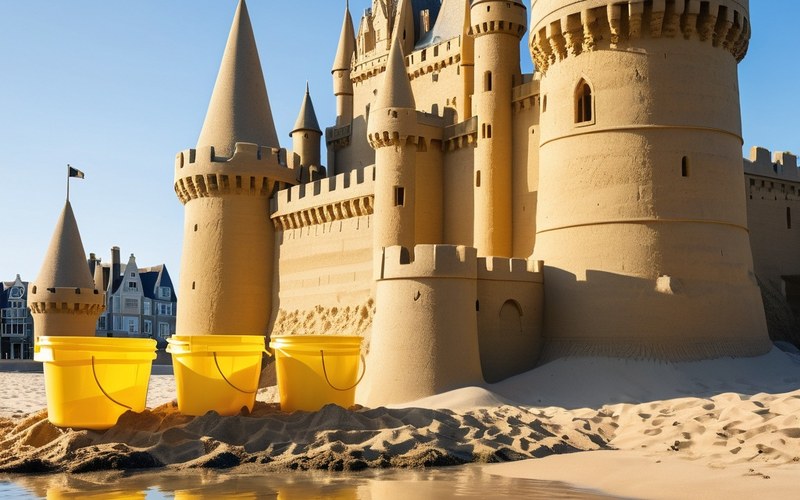
How to Build a Castle and Moat
The classic beach project, done properly rather than hopefully
The castle and moat is the most popular beach project in the world, and also the one most often abandoned halfway through when the moat won't hold water and the turrets keep collapsing. Done with good technique, a castle moat becomes a genuine engineering achievement — a structure that holds water, resists the tide for longer than expected, and looks impressive. This guide covers the technique that makes the difference between a sandcastle and a sand fortress.
Choose Your Location Carefully
The single most important decision is where you build. Too high up the beach and the moat will never fill from the tide. Too low and the first wave overwhelms everything before you have finished. The sweet spot is roughly 5–10 metres above the current water's edge on a gently sloping beach — close enough that you can carry water to fill the moat manually, far enough that you have time to finish before the tide arrives. The best castle-moat sessions end with the tide coming in and filling the moat exactly as planned.
Build the Moat First
Most people build the castle first and then dig the moat around it. This is backwards. Dig the moat first — a trench roughly 20–30cm wide and 20cm deep, in a rough circle or square. Pile the excavated sand to the inside of the moat, not the outside. This sand is your building material. You now have a raised platform for the castle surrounded by a deep trench. Everything you build will be better because you started this way.
The Castle Itself
Work with damp sand packed hard. The classic mistake is building too tall too fast — a base that is wide and solid before any tower height is added. Start with a broad mound, compacted by patting firmly with the flat of a spade. Add height in layers, compressing each layer before adding the next. Turrets are added last — use a bucket mould for consistent results, or cut them from a firmly packed cylindrical mound with a trowel. Carve windows and details with a trowel or lolly stick.
Making the Moat Hold Water
The moat will not hold water unless the sand walls are properly consolidated. After digging, wet the moat walls with a watering can — slowly, repeatedly — until the sand has fully saturated and stopped absorbing. Then use the back of a spade or your hands to press the walls firm. A well-consolidated moat will hold water for 20–30 minutes without refilling. An unconsolidated one drains in seconds.
Defending Against the Tide
When the tide reaches your moat, you have a choice: defend or celebrate. Defending is more fun. Build a sea wall — a ridge of packed sand — on the seaward side of the moat, and man it as the tide arrives. A well-built wall can extend the castle's life by 10–15 minutes as the water works around it. Eventually the sea wins, which is the correct ending to any castle story.