How to Make a Sand Volcano
Five minutes of building, one unforgettable moment of payoff
The sand volcano has a perfect structure: simple to build, satisfying to construct, and with a single climactic payoff moment that children remember for years. The eruption is not complicated — it is just water poured into a crater — but the anticipation, the careful approach with the watering can, and the moment the water overflows and runs down the sides in 'lava streams' is reliably, genuinely wonderful. This is the best five-to-ten-minute beach project in existence.
The Basic Method
Build a cone of damp sand, roughly 30–40cm tall and 60–80cm wide at the base. Compact it firmly as you build — the sides need to hold the water once the crater is filled. The sides should slope at about 45 degrees; steeper than this and the 'lava' runs off too fast; shallower and the effect is less dramatic. Leave the top slightly flattened, not pointed.
Making the Crater
Press a bucket or your fist into the top of the cone to create a crater roughly 15–20cm across and 10cm deep. The crater walls should be smooth and well-consolidated — pack them firmly with wet fingers. The crater is what holds the water before the eruption, so it needs to be properly sealed. If you can see the water immediately soaking away, the sand is too dry — wet the crater walls with a small amount of water first and let it soak in.
The Decoration Phase
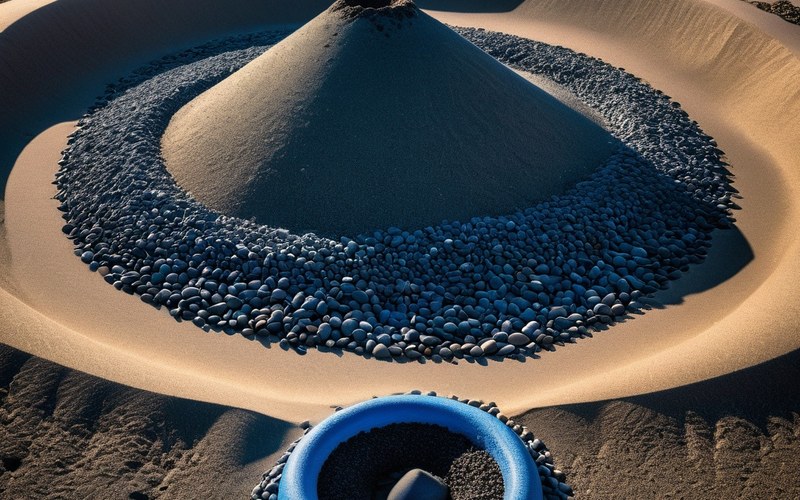
This is the children's favourite part, and it matters for the payoff. Cover the volcano sides with shells, pebbles, and seaweed. A ring of shells around the base looks brilliant when the water reaches it. Make 'lava channels' by pressing your fingers down the sides in lines — these direct the flow during the eruption and make the lava effect more dramatic. Older children can make a whole landscape around the base — villages, roads, tiny people to flee the eruption.
The Eruption
Fill the crater slowly with a watering can — give the rose attachment time to fill the crater without disturbing the walls. Once the crater is full and beginning to overflow, remove the rose and pour directly for the dramatic finale. The water runs down the pre-carved lava channels, washing over the shells and pebbles. If you have bicarbonate of soda and a small amount of vinegar, add those to the crater before the water for a fizzing 'chemical' eruption — this version is spectacular for ages 4–8.
The Grand Version
For a session with older children or a group, build a much larger volcano — 60–80cm tall — and make a proper moat at the base for the 'lava' to collect in. Connect the moat to the sea via a channel so the lava eventually drains away and you can refill and erupt again. A large volcano with a landscape and a working drainage system can absorb 90 minutes and is genuinely impressive.