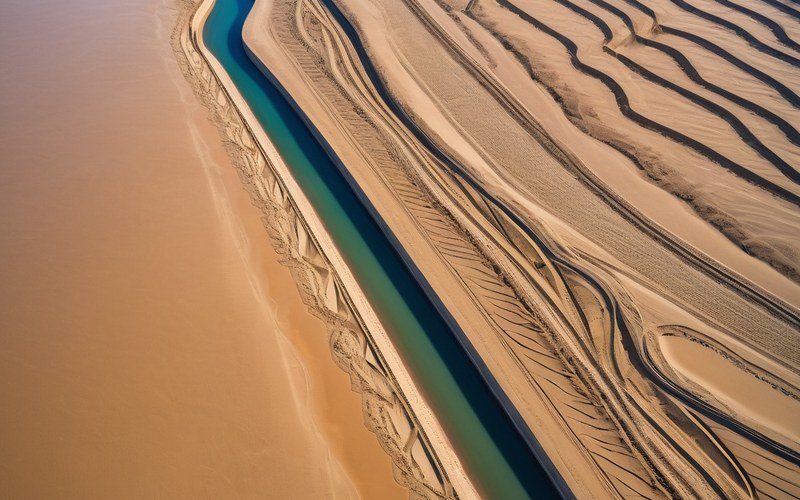
Channel and Dam
Control the water — redirect the sea
An engineering project: dig a channel from a pool or the sea edge toward a target, building dams along the way to control the flow. The aim is to route water from one place to another and then hold it back with a dam. When the dam breaks, controlled chaos ensues. Highly collaborative and endlessly extendable.
Quick Facts
| Best for ages | 5 and up |
|---|---|
| Time to build | 60 minutes and upward — can absorb a whole afternoon |
| Tools needed | spade, bucket, flat stones (optional) |
| Water needed? | Yes |
When to Dig It
Best Conditions
Advertisement
How to Dig It
- Identify your water source (sea edge, rock pool, or natural seep).
- Dig a channel 15cm wide and 10cm deep heading away from the source.
- Every metre or so, build up a sand dam across the channel.
- Let water flow in and fill the first section before breaching the dam.
- Extend the system as far as you like — aim for a distant target like a rock pool.
- The final dam breach is the climax — save it until the whole system is filled.
Variations
Build a branching delta with multiple outlets. Add a lock system — a double dam with a section in between that can be filled and drained. Race two parallel channels side by side.
Seasonal Tips
Spring
Low tide exposes fresh ground. Perfect collaborative spring project for school holidays.
Summer
Evaporation competes with flow in high sun — dig wider channels and work fast.
Autumn
Excellent — the sand is wet and workable, tide tables are well-known, beach is quieter.
Winter
Best channel digging of the year on empty beaches. Waterproofs essential. The flow is fast in wet winter sand.
Try This Hole on Every Beach Type
Flat Sandy Beach
Channel and Dam on a flat sandy beach →
Steep Shingle Beach
Channel and Dam on a steep shingle beach →
Tidal Flat Beach
Channel and Dam on a tidal flat beach →
Rock Pool Beach
Channel and Dam on a rock pool beach →
Shell Beach
Channel and Dam on a shell beach →
Tropical Coral Sand Beach
Channel and Dam on a tropical coral sand beach →
Estuary Beach
Channel and Dam on a estuary beach →
Sheltered Cove
Channel and Dam on a sheltered cove →