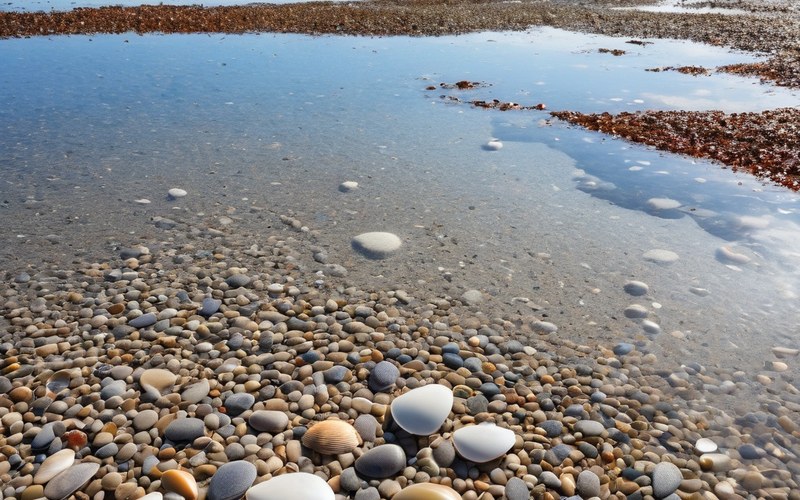
What Is a Rock Pool? (And How They Form)
The natural pools left behind by the tide, and why some beaches are full of them and others have none at all
A rock pool (or tide pool) is a pocket of seawater trapped in a dip or hollow of rock when the tide goes out, left behind until the next tide comes back in to refill it. They form naturally wherever a rocky shore has enough texture — ledges, gullies, and uneven surfaces — to hold water rather than let it all drain away, which is why some beaches are covered in them and a beach a few miles down the coast, flat and sandy, has none at all.
How a rock pool actually forms
Rock pools form on rocky or mixed shores where the underlying rock is uneven — through erosion, old lava flows, or layered rock types that wear away at different rates, leaving basins and channels in the surface. As the tide retreats twice a day, water gets trapped in these low points instead of draining away completely. The same pool refills on the next high tide, so a well-formed rock pool is really a twice-daily cycle rather than a one-off puddle, and the better-established ones have held water through that cycle for years.
Why some beaches have them and others don't
A flat sandy beach has almost no rock pools because there's no rock for water to get trapped against — any dip left by the tide is in loose sand, which drains and reshapes with every wave. Rocky shores, headlands, and the rocky fringes at the edges of otherwise sandy beaches are where rock pools cluster, and the lower down the shore a pool sits, the longer it stays submerged and the more marine life it tends to support, since it spends less time fully exposed to sun and air between tides.
What lives in them
A healthy rock pool is a genuine miniature ecosystem: anemones, small crabs, shrimp, snails, blennies and other small fish, barnacles, and seaweed all adapted to survive being alternately submerged and exposed, and to cope with water that can warm up and get saltier than the open sea while cut off at low tide. The best rock pools for spotting wildlife are usually the larger, deeper ones lower on the shore, which stay cooler and more stable between tides than small shallow pools higher up.