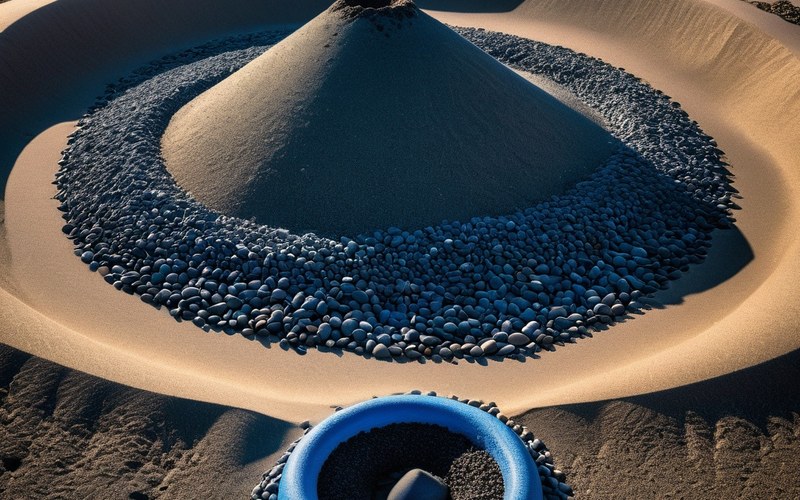
Volcano
Pour water in, watch it erupt
A cone-shaped mound with a deep central pit. Water poured into the top seeps through and emerges from holes dug around the base — or if you're lucky with your sand conditions, the top collapses in a dramatic implosion. Less about the digging and more about the theatre of water meeting sand architecture.
Quick Facts
| Best for ages | 4 and up |
|---|---|
| Time to build | 20–45 minutes |
| Tools needed | spade, bucket |
| Water needed? | Yes |
When to Dig It
Best Conditions
Advertisement
How to Dig It
- Build a solid cone mound, at least 50cm high and 80cm across at the base.
- Pack it firmly with wet sand, patting down as you go.
- Dig a narrow central pit from the top down, stopping 10cm from the base.
- Poke three or four small channels from the base outward at ground level.
- Slowly pour a bucket of water into the top.
- Watch water ooze from the base channels — the 'lava' effect.
- For the collapse version: fill the pit rapidly with lots of water.
Variations
Add red food colouring to the water for full volcanic drama (pack it from home). Build a ring of stones around the base to channel the 'lava flow'.
Seasonal Tips
Spring
Damp sand holds the cone shape well. Good season for slow, theatrical pours.
Summer
Work quickly before the surface dries out. Build near the waterline.
Autumn
Wet conditions make the lava flow more dramatic — water appears faster at the base.
Winter
A satisfying cold-weather activity. The collapse is more dramatic in saturated winter sand.
Try This Hole on Every Beach Type
Flat Sandy Beach
Volcano on a flat sandy beach →
Steep Shingle Beach
Volcano on a steep shingle beach →
Tidal Flat Beach
Volcano on a tidal flat beach →
Rock Pool Beach
Volcano on a rock pool beach →
Shell Beach
Volcano on a shell beach →
Tropical Coral Sand Beach
Volcano on a tropical coral sand beach →
Estuary Beach
Volcano on a estuary beach →
Sheltered Cove
Volcano on a sheltered cove →