
Sand Moulds and Shapes
£5–£20
Instant results that keep younger children engaged while the real digging happens
Sand moulds — the plastic shapes that you fill with damp sand, invert, and lift to reveal a turret, a starfish, a bucket tower — serve a specific and valuable purpose in a mixed-age or young-children beach session. They give instant, visible results that require no skill and no patience. While older children dig the serious holes, younger siblings can make an entire decorated landscape of moulded shapes around the main project, contributing genuinely without getting in the way. The trick is choosing moulds that actually work — many cheap sets produce results that collapse on lifting.
What to Look For
- Wall thickness: thicker plastic releases more cleanly — very thin mould walls flex when you try to lift them and the shape collapses
- Shape complexity: simpler shapes (cylinders, domes) release more reliably than complex ones with overhangs and fine detail
- Handle or lifting tab: any mould without a clear lifting mechanism is frustrating for young children to use independently
- Set size: a set of 4–6 complementary shapes (tower, dome, arch, small shell) is more useful than 12 random shapes
- Compatibility: some sets are designed to stack — a dome on a cylinder on a square base makes an impressive tower with minimal skill
Tips
- The sand consistency is everything: too dry and it won't hold, too wet and it collapses on release. The sand should clump when you squeeze it but not drip.
- Pack the mould firmly with the back of a spade — really press it in. Loose packing is the main reason moulded shapes collapse.
- Lift cleanly and quickly — a slow uncertain lift lets the shape slump sideways. One decisive upward pull is better.
- Let young children do their own section away from the main hole — a 'decoration village' nearby keeps them engaged and gives them ownership.
- A set of simple geometric shapes (Quut Cuppi, Scrunch bucket sets) works better than 'castle set' sets that promise more than they deliver.
- Wet the mould before filling — a wet interior surface releases far more cleanly than a dry one.
- At the end of the session, decorating the finished hole or castle with moulded shapes is a satisfying closing activity for younger children.
Alternatives and Improvisations
Yoghurt pots, ice cream tubs, and plastic cups from the kitchen make perfectly good moulds. A round-bottomed pudding basin makes an excellent dome. Silicone baking moulds (small ones) release very cleanly and work brilliantly.
Advertisement
Best For These Holes
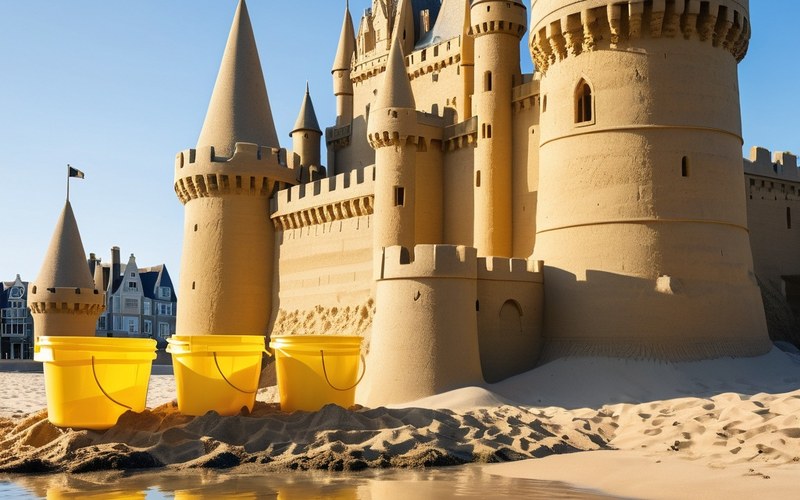
The classic — a sandcastle's best friend
Dig deep, hide well, find glory

The timeless classic — bury a sibling