Beach Safety for Families Digging
The simple rules that prevent the most common beach digging incidents
Beach digging is overwhelmingly safe — it is, after all, digging sand rather than rock-climbing or white-water kayaking. But there are a small number of genuine risks that are worth knowing and worth managing. The most serious is tunnel collapse; the others are mostly about awareness of the sea, the sun, and the physical environment. This guide is not a long list of things to worry about — it is a short list of things to actually do.
The Tunnel Rule
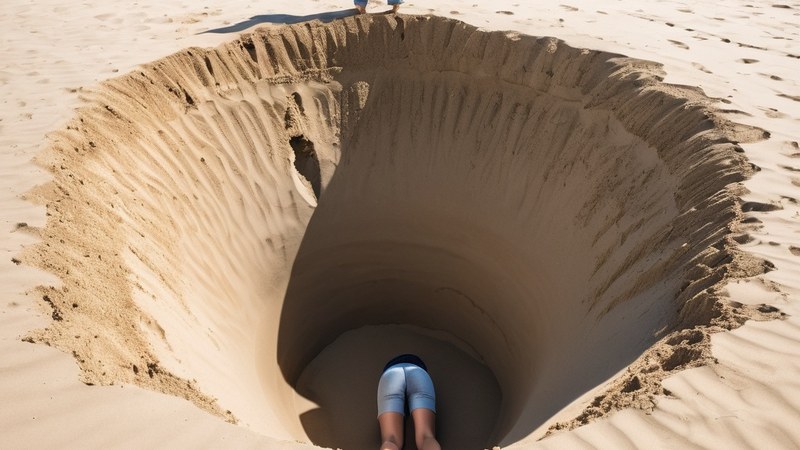
The one firm rule: children do not enter, approach, or put their head inside a tunnel during construction. Adults only, working from the entrance, until the tunnel is fully complete and declared safe. A tunnel collapse with someone inside requires immediate excavation from above — this is a serious emergency. Once complete and inspected, the tunnel is safe for children to pass through one at a time. Fill every tunnel completely before leaving the beach.
The Hole Depth Rule
No hole should be dug deeper than the waist height of the digger without shoring the walls. Deep vertical-sided holes in dry or semi-dry sand can collapse inward without warning. If you are digging a deep hole for any reason, slope the walls — a bowl shape rather than a cylinder. Fill in all deep holes before leaving the beach, even if it seems unnecessary. A hole left on a busy beach is a trip hazard after dark and a genuine danger to small children.
Know the Tide
Check tide times before arriving, not when you are already on the beach. Know whether the tide is coming in or going out, and roughly how fast. On tidal flats and wide beaches, the tide can travel faster than it appears — the water that seems far away can reach you in minutes when the tide turns. Establish a 'safe line' — a point on the beach at which you will pack up and move regardless of how the project is going. Stick to it.
Water and Weather
Digging is physical work. Children dehydrate faster than adults and often do not notice until they feel unwell. Bring more water than you think you need and enforce drink breaks every 30–45 minutes regardless of whether anyone says they are thirsty. In strong sun, take the session into morning or early evening — 10am to 2pm are the highest UV hours in the UK summer. Wet sand reflects UV more than dry sand; hats and sunscreen matter more at the beach than they do in the garden.
Spade Safety
Children's plastic spades are essentially harmless. Metal spades — children's or adult — can cut skin. The main risks are: stepping onto a blade left point-up in the sand (always lay spades flat when not in use); swinging a spade while nearby people crouch to dig (enforce a 'no swinging' rule for children); and using a full-size metal spade barefoot (always wear footwear when using an adult metal spade).
Supervision Near Water
The sea is the main hazard on any beach, not the digging. Toddlers in particular have no awareness of incoming waves and no instinct to move away. Designate one adult as the water-safety supervisor in a mixed-age group, with clear responsibility for the under-5s near the water's edge. This is not shared responsibility — it is one named person who does nothing else. The digging should happen well above the waterline; trips to the sea to collect water should be supervised individually.