🪣
The Children's Spade
£4–£22
The single most important piece of kit you will ever buy for the beach
A good children's spade transforms what a child can do on the beach. A bad one — too flimsy, too short, too heavy — turns digging into a frustration and a source of conflict. The market is split between cheap plastic toys that bend on first contact with compacted sand and proper lightweight metal spades that last years and dig like a dream. This guide covers everything you need to know to buy the right spade for your children's ages.
What to Look For
- Handle length: the spade should reach a child's hip when standing upright — they will tire quickly if the handle is too short
- T-bar vs D-grip: T-bar handles (a straight crosspiece) give more pushing power; D-grips are more comfortable for younger children
- Blade material: lightweight aluminium or stainless steel beats plastic for anything beyond toddler use — it cuts sand cleanly and doesn't flex
- Blade width: 14–16cm is the sweet spot for under-10s; too wide and it becomes too heavy when loaded
- Weight: hold it before buying if possible — a spade that feels heavy in the shop will feel impossibly heavy after 30 minutes of digging
- Folding vs fixed: folding spades are compact but the joint introduces flex; fixed spades are sturdier for serious digging
Tips
- Buy one spade per child — sharing a spade causes more conflict than any other beach scenario.
- A 70cm metal spade with a T-bar handle is ideal for ages 5–10. Look for brands like Moeller or similar German/Scandinavian beachware.
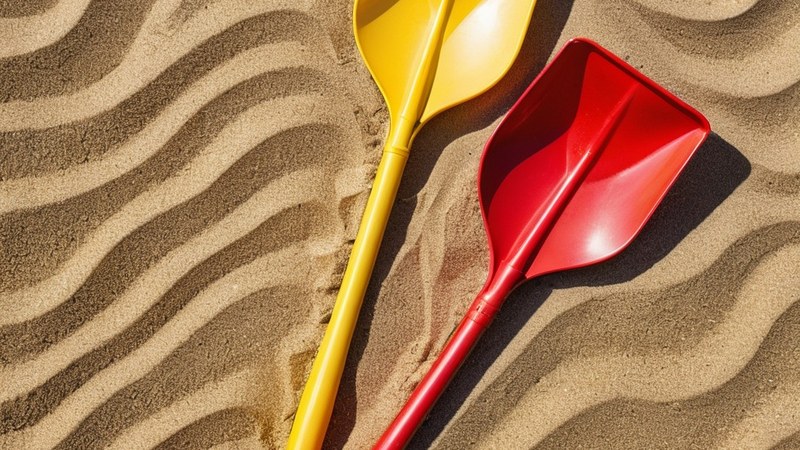
- For under-3s, the Gowi or Quut-style wide plastic spades are better than the typical red-and-yellow toy variety — wider blade, better proportioned.
- Write the child's name on the handle with a permanent marker. You will lose it otherwise.
- Rinse and dry spades before storing — salt water corrodes metal blades faster than you'd think.
- A spare spade in the car boot has saved many beach sessions — they get left behind, sat on, and snapped.
- If budget is tight, one good adult-size lightweight aluminium spade does more work than three cheap children's ones.
Alternatives and Improvisations
In a pinch: a large flat-edged kitchen spoon works for toddlers. A gardening hand trowel is better than nothing for older children. Flat stones can be used for the final stages of tunnel digging.