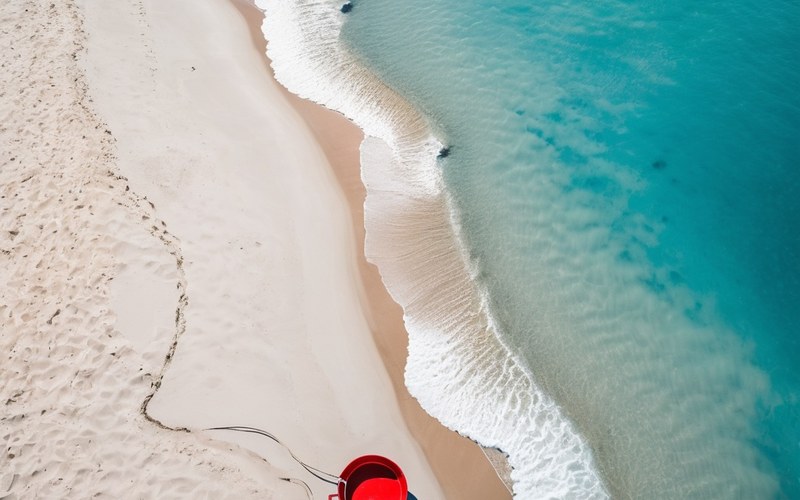
Sand Pool
Build your own private paddling pool
A wide, shallow hole dug close enough to the waterline that it fills naturally with seawater — or is connected to the sea by a narrow channel. Toddlers can splash in a warm, calm, contained pool while adults sit nearby. One of the most satisfying builds because it has a clear functional payoff.
Quick Facts
| Best for ages | All ages — toddlers especially |
|---|---|
| Time to build | 45–90 minutes |
| Tools needed | spade, bucket |
| Water needed? | Yes |
When to Dig It
Best Conditions
Advertisement
How to Dig It
- Choose a flat area 10–20 metres from the current waterline.
- Mark out an oval or circle 1.5–2 metres across.
- Dig down 20–30cm, throwing all spoil outward to build up the walls.
- Tamp the walls down firmly so they hold water.
- Dig a narrow inlet channel toward the sea — stop just before it breaks through.
- When you're ready, break through the channel and let water flood in.
- Block the channel with sand once full for a calm pool.
Variations
Add a connecting channel to a second, shallower pool for toddlers. Build a deeper 'dive pool' attached to the main pool for older children to jump into.
Seasonal Tips
Spring
Water will be cold — best as a paddling pool rather than a swim pool. Consider a sunny sheltered spot.
Summer
Shallow pool water warms quickly in sun. Perfect toddler activity. Make it wide and shallow.
Autumn
Wind can make sitting in the pool uncomfortable. Build a sand windbreak on the prevailing side.
Winter
A wind-sheltered pool becomes surprisingly cosy in winter sun. Wellies and waterproofs recommended.
Try This Hole on Every Beach Type
Flat Sandy Beach
Sand Pool on a flat sandy beach →
Steep Shingle Beach
Sand Pool on a steep shingle beach →
Tidal Flat Beach
Sand Pool on a tidal flat beach →
Rock Pool Beach
Sand Pool on a rock pool beach →
Shell Beach
Sand Pool on a shell beach →
Tropical Coral Sand Beach
Sand Pool on a tropical coral sand beach →
Estuary Beach
Sand Pool on a estuary beach →
Sheltered Cove
Sand Pool on a sheltered cove →