Fossil Dig Pit
Bury it, map it, and excavate it like a real palaeontologist
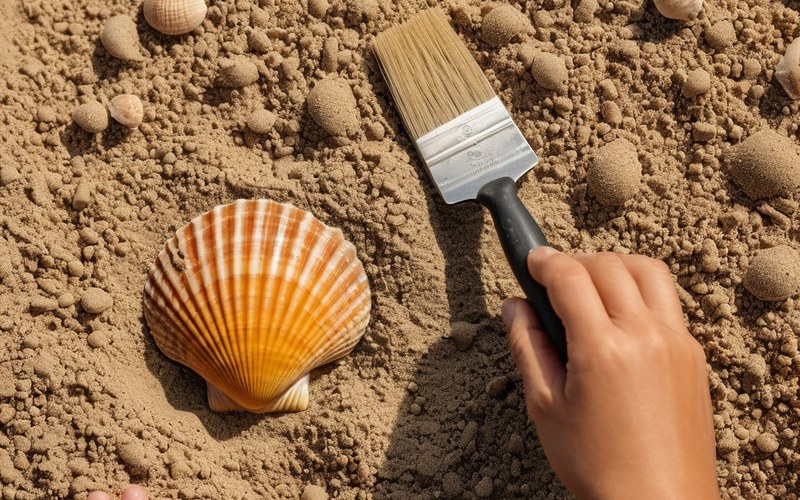
A pre-planned excavation game rather than a free-dig: shells, pebbles, or small toys are buried in a marked-out grid, and children carefully brush and scrape away the sand layer by layer to 'discover' each one, the way an archaeological dig actually works. It rewards patience and gentle technique over speed and brute digging, which makes it a good change of pace on a beach day that's had a lot of energetic tunnel or moat building.
Quick Facts
| Best for ages | 5 and up |
|---|---|
| Time to build | 30–50 minutes |
| Tools needed | trowel, childrens-spade, hands |
| Water needed? | No |
When to Dig It
Best Conditions
Advertisement
How to Dig It
- While children aren't watching, bury a handful of shells, colourful pebbles, or small toys at varying shallow depths across a marked-out square, roughly a metre by a metre.
- Mark the square's corners with sticks or a trailed line in the sand so diggers know their boundary.
- Divide the square into a rough grid using lines drawn in the sand, and assign each child a section.
- Give each digger a small trowel or their hands, and have them work slowly, brushing sand away in thin layers rather than scooping deep.
- When something is uncovered, leave it in place rather than pulling it straight out — carefully clear the sand around it first, the way a real dig works.
- Once everything in a section is found, record what was uncovered before moving to the next square.
Variations
For younger children, bury fewer items closer to the surface and skip the grid system. For older children, add a simple 'field notebook' where they sketch or note what they find and where, turning it into a proper mock excavation.
Seasonal Tips
Spring
Good conditions throughout — loose, workable sand at most beaches.
Summer
Dry surface sand is ideal for this one, unlike most other holes — the dig works best when the covering layer is loose.
Autumn
Still works well, though sand may be a little heavier after rain — brushing takes slightly more effort.
Winter
A good option when the sand is too cold and wet for prolonged digging elsewhere — this is a gentler, slower activity.
Try This Hole on Every Beach Type
Flat Sandy Beach
Fossil Dig Pit on a flat sandy beach →
Steep Shingle Beach
Fossil Dig Pit on a steep shingle beach →
Tidal Flat Beach
Fossil Dig Pit on a tidal flat beach →
Rock Pool Beach
Fossil Dig Pit on a rock pool beach →
Shell Beach
Fossil Dig Pit on a shell beach →
Tropical Coral Sand Beach
Fossil Dig Pit on a tropical coral sand beach →
Estuary Beach
Fossil Dig Pit on a estuary beach →
Sheltered Cove
Fossil Dig Pit on a sheltered cove →